Archive for the Intercept Category

What’s new in 3.4?

Posted in Intercept on April 7, 2015 by Mr Backman

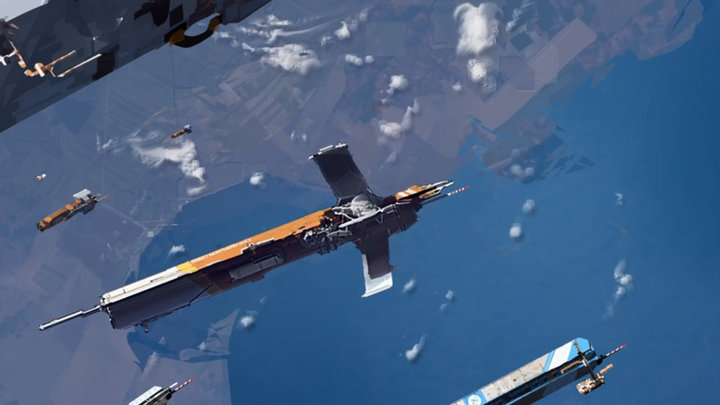
Missiles

The new 3.4 version of Intercept is here and in this post I’ll try to briefly go through the changes. Aside the rulebook itself I have updated the ship design system (Ship.xls and Data.xls), the DataCard.pdf and of course all the ready made design, they are all available on the downloads page.

Initiative

  • Initiative is determined as follows (in order of priority):
  • 1 Untracked ships have higher Initiative (ignore 2-5 if Untracked)
  • 2 Higher steps of turns have higher Initiative
  • 3 Aft centerline advantage have higher Initiative
  • 4 Ship tactics win ties with Pilot (optional)
  • 5 Higher crew station win ties (Bridge > Full > Limited)
  • 6 Break ties with player A wins on odd, B on even turns, note on DataCard.

Being on a ship’s Aft centerline while it is not in your Aft centerline breaks Initiative ties from steps of turn. This allows for more dogfighting opportunities for high turn ships and skilled Pilots, just the way we like it. As ships cannot attack targets in Aft centerline and those ships defend at -3 DM and thwy will also lose their Track at the end of a turn this is where you want to be.

Ship & Fleet tactics
This section has been moved to the optional rules as it rarely shows up in the small skirmishes typical for Intercept.

Sensors
The Sensor task is now used to determine what Signal that is required for a Tracked result, nothing else. Planet LOS rules has been considerably simplified and clarified.

Ramming, docking, aerobrakes etc
This section has been rewritten to be more consistent and realistic. Take special note in how hard docking has become; you should make a VGood result to ensure docking but thankfully co-vector ships that drifted will get a whopping +6, +2 for both drifting and another +4 for co-vector.

Relative velocity
Another line of 0 delta has been added that reduce PEN & DAM by -6 and give a +4 DM, a great boon for docking ships.

Missile design
Missile design has been moved to the design system section and nuke missiles has been added to the optional rules.

Missiles need no longer be within launcher arc except during impact, they must still be within launcher range at the end of each turn though.

Underpower
Power requirements were always a bit nebulous in Intercept and has now been clarified and automated. The Ship.xls has fields for any Underpower DM, one for Thrust and another for Drift. There are of course places to fill these in on the DataCard.

Attack arcs
Attack arcs for missiles, ramming and co-vector ships has been clarified and moved to the general combat section as it is relevant for more than missiles.

Armor penetration
You no longer roll for armor penetration, instead you just compare PEN vs ARM and get Full penetration, Partial penetration or No penetration, one less die roll to bother with.

Damage
Damage is rolled as usual, but a 1 is a Cascading Damage and a 6 is a Stun with immediate and harsh stun effects. A Destroyed result is no longer rerolled as Hull damage but instead it simply adds damage to the Hull; Severe damage for destroyed Surface location and Critical for the other locations, one less die roll there too.

Scale
Small scale has been removed as I will never make useable planet LOS rules for planets covering half the map and combat involving nearby asteroids can be handled just as well with normal scale. The Large scale rules have been updated to cover the other changes from above.

Intercept notes
I moved my notes out of the design system and into the last page of the rulebook, just before the two pages of reiterated tables at the back.
Nukes in space!

Posted in Intercept, Rules, Traveller on April 6, 2015 by Mr Backman

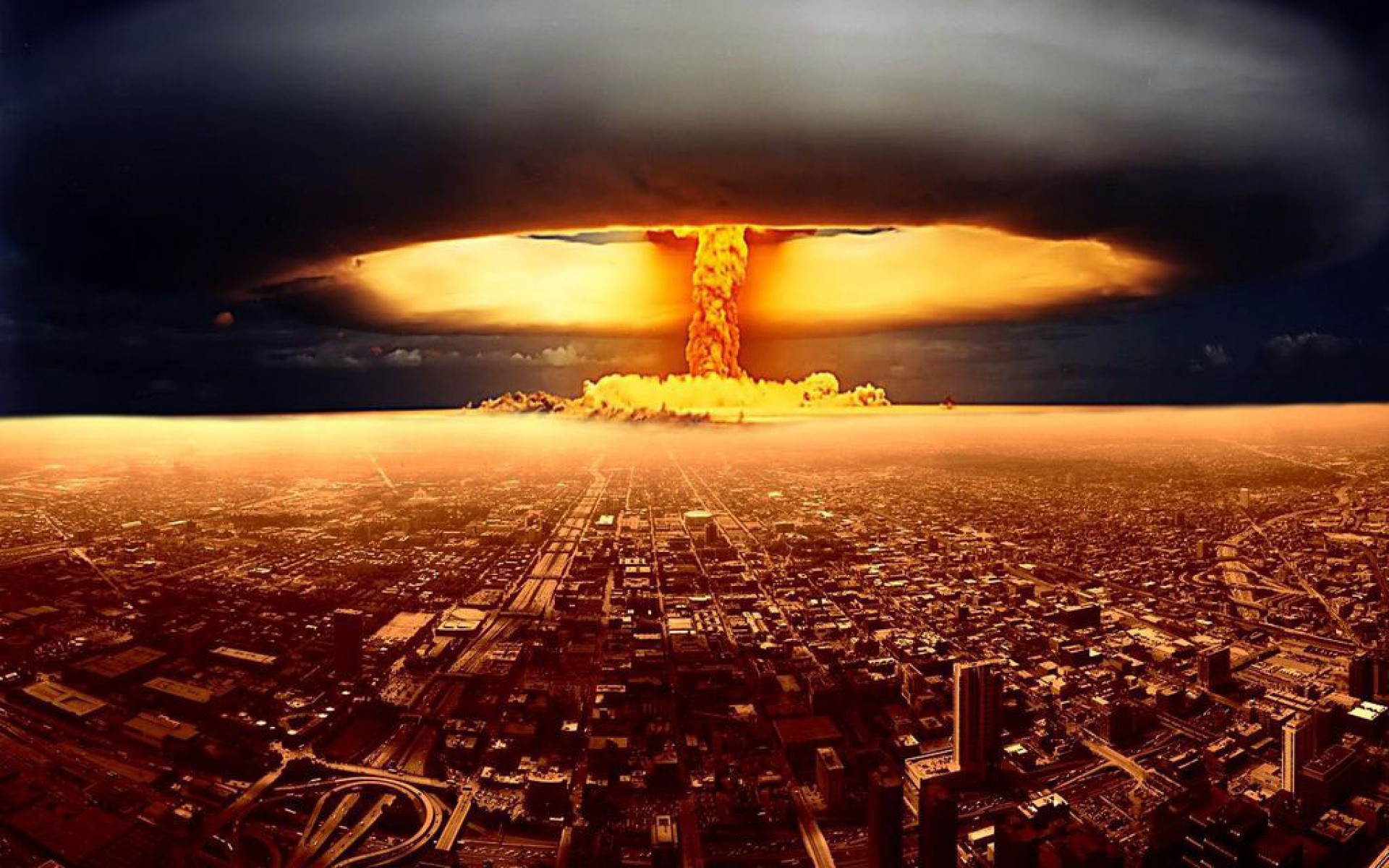
Atomic blast

Humankind have detonated 17 nuclear devices in space during the cold war the largest being the US Starfish at 1.4 Megatons. From Wikipedia:

“Starfish Prime produced an artificial radiation belt in space which soon destroyed three satellites (Ariel,TRAAC, and Transit 4B all failed after traversing the radiation belt, while Cosmos V, Injun I and Telstar 1 suffered minor degradation, due to some radiation damage to solar cells, etc.).”

“The worst effects of a Soviet high-altitude test occurred on 22 October 1962, in the Soviet Project K nuclear tests (ABM System A proof tests) when a 300 kt missile-warhead detonated near Dzhezkazgan at 290-km altitude. The EMP fused 570 km of overhead telephone line with a measured current of 2,500 A, started a fire that burned down the Karaganda power plant, and shut down 1,000-km of shallow-buried power cables between Aqmola and Almaty.”

If you are playing in the Traveller setting nukes are only allowed by the Imperial Navy or System defense forces and can only be used in wartime. Mercenary slang for wars involving nukes is ‘Bad war’, all other wars are called ‘Good war’.

Missile nuke option

  • Large nuclear missile TL 6+
  • Medium nuclear missile TL 7+
  • Small nuclear missile TL 8+

Consult the tech chart above to see at what Tech Level each missile class gets the nuke option. Nuke option reduce thrust with -2G and have a price multiplier of x10. PEN & DAM +12 when directly impacting a target but they can also be proximity detonated for +3 DM to hit and PEN & DAM -6, proximity detonation is not a design option but a choice the missile operator can do when attacking.

Nuke attacks and defense
Nuke attacks work the same as for normal missiles but the target may defend using one laser battery and one nuclear damper battery. Ships with a functional Neutrino detector will know if a missile is a nuke or not, all others must guess. Firing a nuclear damper on non-nuke missiles has no effect, of course.

Proximity detonation
The nuke missile operator may elect to detonate the nuke some way off the target for a +3 DM and PEN & DAM -6. Damage from proximity detonations should use the Spray fire rules were the degrees of success give more hits rather than more damage at one hit.

  • VGood 3 Fair hits
  • Good 2 Fair hits
  • Fair 1 Fair hit

Nuke secondary effects
The X-Ray, neutrino and gravity burst from the detonation also affect nearby ships interfering with their sensors. Visual/IR and Radar lose any tracks unless they were popped down, Neutrino and Mass lose their tracks regardless. Max range for this effect depend on the size of the missile:

  • Small 1 square
  • Medium 3 squares
  • Large 5 squares

Fleet tacticians and nukes
Fleet tacticians allow their Ship tacticians to fly more dispersed formations. An Expert+ Fleet tactician allow his Ship tactician to have a wide enough separation from any nuke secondary effects!

Ripley: I say we take off and nuke the entire site from orbit. It’s the only way to be sure.

Hudson: Fuckin’ A!

Burke: Hold on a second. This installation has a substantial dollar value attached to it.

Ripley: They can *bill* me.

Tactics in Intercept 2

Posted in Intercept, Scenarios on March 23, 2015 by Mr Backman
In orbit

The previous post on Tactics in Intercept dealt with the character skills of Ship and Fleet tactics. In this article we will talk about player tactics, how to play Intercept effectively.

Each scenario should have a clear objective for each side and the objective should never be ‘kill the enemy forces’. Real battles rarely work like that and they tend to be boring tests of ship capabilities with not many choices for the player to make. Instead, we want objectives where combat is a tool to realize them. Side A should land a ship on a planet, side B should stop them. Side A is escorting a trader from Earth to the moon and side B should stop them. Side A should take out an orbital station, side B should stop them etc

Intercept combat consist of two separate stages, before and after detection. Some scenarios may have one or both sides already detected but most of them will start double-blind.

Before detection
Spread your ships into separate boxes to avoid having them detected at the same time. If you have fission or fusion thrusting ships you must be really careful when to thrust, the fuel limit is one problem but the real killer with those drives is that you are almost guaranteed to become Tracked if they scan you when you thrust.

If you manage to stay undetected longer than your opponent you have an enormous advantage as you can see his moves before you do yours and your attacks will always go first. Beam attacks typically give away your position so it is important to not attack before you have a decent chance of hitting, but don’t wait too long, your opponent may have you detected and your advantage will have gained you nothing.

If you have cold start missiles launch a volley as soon as you got your opponent detected and have them drift closer him. Missile attacks does not automatically get you detected as beam attacks generally do.

After detection
Pay close attention to firing arcs and aft centerline. If you have more than one ship team them together to cover the wing mans cracks in his arcs, turning after thrusting really help here. Try to attack ships from the rear to hit the vulnerable thrust location and avoid hitting the hard to damage hull location. Concentrate firing on one ship until it is disabled as those pesky repair crews can revert minor damage in a jiffy.

If you think you might get attacked by missiles don’t use your lasers for attack. Lasers used to attack cannot later be used against missiles. Missiles are deadly in Intercept, don’t let them hit you. Facing towards the attacker increases the chance of hull hits and lessens the risk of vulnerable thrust hits, roll to bring any dorsal mounts to bear.

Always have the scenario objective in mind. Fighting is dangerous so avoid it if you can, and remember the motto of Space rouge pilots: “Keep the solar wind to your backside”.

Merry Christmas

Posted in Intercept on December 24, 2013 by Mr Backman

Vector_XMas

Nothing new here. except a tiny update to the rulebook clarifying the Planet LOS rules. Anyhow, merry midvinterblot which is what this fine holiday was originally called, before it was stolen by you-know-who.